
Lohri 2023 - THE BONFIRE FESTIVAL OF INDIA
People from the Sikh and Hindu communities celebrate Lohri on the 13th of January in Northern India, especially Punjab. It is said that the festival commemorates the passing of the winter solstice and that this Lohri is celebrated to bring joy to the Rabi crop season. Lohri marks the end of the winter season, and the warm sunny climate is welcomed with traditional songs, dance, and other rituals.
On the lunisolar Bikrami calendar, Lohri is observed the night before Makar Sankranti, also known as Maghi. It falls on the 13th of January of the Gregorian calendar and is set by the solar part of the lunar Punjabi calendar. Makar Sankranti falls on the 14th of January.
Several people believe that Lohri is derived from the wife of Saint Kabir, Loi. According to another popular legend, Lohri is derived from the word Loh, which means light and warmth of the fire. Another legend holds that Holika & Lohri were sisters. Holika perished in the holy fire, while Lohri survived with Prahlad. Another belief holds that Lohri derives its name from Rorhi and Til, which are eaten during the festival. Hiroshi was shortened to Lohri.
This is where I come from
As per the ancient tales, Lohri is an age-old mid-winter Hindu festival in regions near the Himalayan Mountains, where the winter season is colder than the rest of the subcontinent. During the Rabi season, Hindus lit bonfires and socialized around them, singing and dancing, following weeks of crop production. The Hindus used to take a holy bath after the nightlong celebration around the bonfire to mark Makar Sankranti. People of Sikh or Hindu origin still celebrate it, but Punjabi people celebrate Lohri on the last day of the winter month, which is why it marks the passing of the winter solstice.
Lohri is also said to have originated during the Indus Valley Civilization. During the same time and date, the rest of India also celebrates the outcome of a good cropping season, as this civilization flourished in North India and parts of Pakistan. On the 13th or 14th of January, several festivals are celebrated in Tamil Nadu, West Bengal, Assam, and Kerala, including Pongal, Makar Sankranti, Magha Bihu, and Tai Pongal.
Many stories surrounding Lohri are linked to some religious or social tradition. But one of the most famous is that of Dulla Bhatti.
Like Robin Hood, Dulla Bhatti was very popular among the poor during Akbar's reign. The reason for his immense popularity is that he used to snatch away, plunder, and loot the wealth of the rich and distribute it among the poor and underprivileged. When he saved a girl from abductors, he devoted all his attention to her as if she were his own. Every Lohri, children dress up in their new clothes and ask their neighbors for "Lohri loot" in the form of money and delicacies like laddoos, peanuts, jaggery, etc.
The "Robin Hood Of Punjab" also saved the poor Punjabi girls from being sold in slave markets. Additionally, he found suitable grooms for these girls, arranged their marriages, and provided them with a dowry. The Punjabi folklore Sunder Mundriye now associates Sundri and Mundri with these two girls.
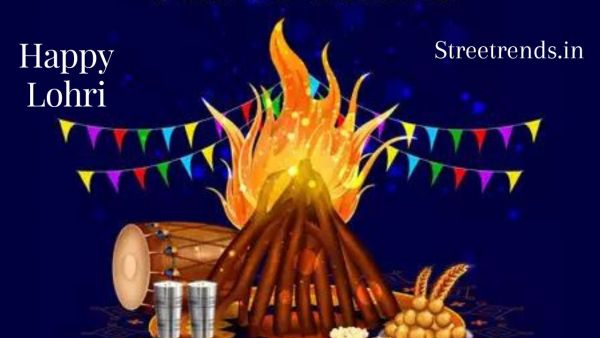
Lohri celebrations have the following significance.
A day before the winter solstice is chosen to celebrate Lohri, India's coldest night and the longest night and shortest day of the year. As the night is very chilly, people have to keep themselves warm, so fires are burnt, and people sit in a circle around them to keep them warm. People appease the sun and fire deities around the bonfire and then eat the remnants of the offering, dance, and sing before sharing a heavy meal.
This festival is also known as the harvest festival (of Rabi crops) since Punjab-Haryana became the most fertile belt of India after the green revolution. It celebrates sugarcane, radish, jaggery, sesame, mustard, and spinach. In the winter, repair and gajak are mainly worn to keep the body warm.
During Lohri, the climate changes and becomes harsh. Lohri-specific food like sesame and jaggery is consumed to prepare the body for the harshness of nature.
As well as all the above, Lohri is associated with the sun, earth, and fire. The sun symbolizes life, the earth signifies food, and the fire signifies health. The Lord gives us all these elements of nature "free of charge," and we must thank him for providing us with life and opportunities.
Natural elements provide us with life and all other necessities, so sometimes we must thank them and pray to them for providing for us and blessing us with prosperity.
A celebration
On the eve of Lohri, people gather around a bonfire to make offerings like til, moongphali, and chairs to the burning embers. It is safe to say that Lohri sets a bright tone for the year ahead. In addition to eating roasted corn from the fresh harvest, people also need sugarcane products such as yogurt, gajak, etc. These food items are an essential part of the celebration of Lohri.
Trick-or-treating fun
Several teenagers in Punjab walk in their neighborhoods 10-15 days before Lohri to collect logs (in some places, they also collect grains and jaggery) for the evening bonfire. One group member has ash smeared on his face and a rope tied around his waist as he does so. This ritual ensures that everyone gives their fair share of treats; otherwise, the boy will try to enter the house and smash anything he finds, such as a clay pot.
Thanksgiving-like similarities
Lohri is a time to thank nature for providing us with a good harvest. It is a time to be grateful for the abundance that nature has provided for us. During the festival, family reunions and merrymaking, along with dancing to traditional folk songs, illustrate a sense of brotherhood, unity, and gratitude. During this time, thanksgiving is also given to the Sun God for a successful harvest.
Lohri brings lots of joy, happiness, and good luck to households in India. Crops are ready for harvest, and many joie de vivre can be seen everywhere. These are the top five cities where this festival is celebrated.
Lohri 2023 Celebrations In Indian Cities
Lohri brings lots of joy, happiness, and good luck to households in India. Crops are ready for harvest, and many joie de vivre can be seen everywhere. These are the top five cities where this festival is celebrated.
New Delhi
As the capital of Punjab and Haryana, Chandigarh is a beautiful, well-planned city. Lohri is a festival celebrated with enthusiasm, gusto, and galore. Large-scale Lohri parties are organized, and people visit each other's homes to meet and greet, exchange sweets and have fun. The festival atmosphere is festive and exciting because of bright lights, bonfires, and adorned Gurudwaras.
Amritsar
The city of Golden Temple, Amritsar, gets ready to celebrate this harvest festival with loads of enthusiasm. Many devotees visit Golden Temple to seek blessings and dress up in their best finery and ornaments to dance to reverberating drum beats. Markets bustle with visitors and prepare delicious food.


